




Tech and Engineering: The Invisible Force Quietly Running the World
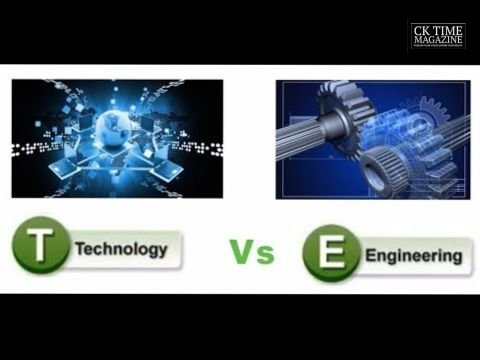
Tech and engineering don’t announce themselves when they enter a room. They don’t need to. They’re already there, embedded in the walls, humming inside devices, flowing through cables, algorithms, and decisions you never see. You wake up because an engineered alarm goes off. You check your phone, powered by layers of software engineering and hardware design you’ll never fully notice You commute on roads designed decades ago by civil engineers who assumed you’d never think about them. That’s the strange beauty of tech and engineering. When they work well, they disappear.
But make no mistake. Nothing about them is simple.
At its core, tech and engineering are about turning ideas into systems that survive reality. Not theory. Not perfection. Reality. And reality is chaotic, unpredictable, and unforgiving. People spill coffee on keyboards. Weather ignores calculations. Users click the wrong button. Data lies. Materials fatigue. And engineers? Engineers adapt. Again and again.
This is not a clean discipline. It’s a resilient one.
How Tech and Engineering Stopped Being Separate Things
Once, technology was the tool and engineering was the process. Clear lines. Easy definitions. That world no longer exists. Today, tech and engineering are deeply intertwined, almost inseparable. A modern engineer doesn’t just design structures or circuits. They design experiences, systems, ecosystems.
A mechanical engineer now writes code. A software engineer worries about power consumption. An electrical engineer thinks about cybersecurity. These overlaps are not accidents. They are responses to complexity.
As systems grow smarter, they also grow more fragile. One small failure in a line of code can shut down an entire manufacturing plant. One overlooked sensor can compromise a medical device. That’s why integrated engineering systems in modern technology are no longer optional. They’re survival strategies.
And yes, this makes things harder. But meaningful progress was never easy.
The Human Side of Engineering Nobody Talks About
There’s a myth that tech and engineering are cold, logical, emotionless fields. That myth is convenient. And wrong.
Engineering is full of doubt. Long pauses. Quiet panic. Late nights. Engineers argue. They guess. They revise They second-guess themselves constantly. Not because they’re unsure, but because the cost of being wrong is high.
Picture this. A bridge engineer stands on a structure they helped design. Cars pass overhead. People trust it without question. That weight is not just physical. It’s emotional. Responsibility has mass.
In tech, the pressure is quieter but just as real. A developer pushes code knowing millions might use it. A systems engineer deploys an update praying nothing breaks. These moments are invisible, but they shape outcomes.
That’s why engineering decision-making under real-world constraints is such a critical skill. Not everything can be optimized. Trade-offs are constant. Perfect solutions don’t exist.
Only better ones.
Innovation Is Usually Boring at First
Popular culture loves breakthrough moments. The “aha.” The sudden leap. But tech and engineering rarely move like that. Innovation is usually slow. Incremental. Almost boring. Until it isn’t.
Most technologies that change the world start as small improvements no one notices. Faster data transfer. Slightly better battery life. Marginally more efficient algorithms. One percent gains stacked on top of each other until suddenly, everything feels different.
This is why engineers obsess over details. Tiny improvements scale. Small mistakes do too.
If you want to understand how progress actually happens, look into continuous improvement models in engineering and technology. They explain why patience often beats brilliance.
Failure: The Most Honest Teacher in Engineering
Engineering education rarely advertises this, but failure is the real curriculum. Projects fail. Prototypes break. Systems crash. And that’s not a flaw. It’s the process.
The difference between amateur and professional engineering is not avoiding failure. It’s controlling it. Anticipating it. Learning from it before the stakes are high.
That’s why simulations matter. Why stress tests exist. Why redundancy is engineered into critical systems. Failure is assumed. Planned for. Expected.
In tech, failure moves fast. A bug can go viral in minutes. An outage trends on social media. Pressure is immediate. But so is feedback. Engineers learn quickly or fall behind.
This environment has shaped a generation of professionals who are adaptable, skeptical, and oddly optimistic. Because every failure contains information.
Ethics Is No Longer Optional
There was a time when engineers could claim neutrality. Build the tool. Walk away. That time is over.
Tech and engineering now shape elections, healthcare, surveillance, finance, and human relationships. Algorithms influence behavior. Systems amplify bias. Designs exclude or include by default.
Ignoring ethics is no longer ignorance. It’s negligence.
Modern engineers are being asked hard questions. Who benefits from this system? Who is harmed? What assumptions are baked in? These questions slow development. They complicate processes. And they absolutely should.
The rise of ethical fabrics in technology and engineering design reflects a growing mindfulness that power demands responsibility. Masterminds do n’t just break problems presently. They shape futures.
That’s heavy. But necessary.
Sustainability and the Cost of Shortcuts
Engineering once focused almost entirely on performance and cost. Faster. Stronger. Cheaper. Today, there’s a fourth constraint that refuses to be ignored. Sustainability.
Short-term efficiency often leads to long-term damage. Materials extracted irresponsibly. Systems designed without end-of-life plans. Energy wasted because optimization wasn’t prioritized.
Now, tech and engineering are being forced to think in cycles, not straight lines. Where does this material come from? Where does it go? What happens when it fails?
The push toward sustainable engineering practices in modern technology is not driven by idealism alone. It’s driven by reality. Resources are finite. Waste is expensive. Public tolerance is shrinking.
Engineers are adapting. Slowly. But surely.
Artificial Intelligence Changed the Rules
AI didn’t just add a new tool to the engineering toolbox. It changed the toolbox itself.
Engineers now design systems that learn. That adapt. That behave in ways even their creators can’t fully predict. This is powerful. And unsettling.
AI accelerates design, optimizes structures, predicts failures, and writes code. But it also introduces opacity. Decisions without clear explanations. Outcomes without obvious causes.
That’s why the conversation around explainable AI in engineering applications is growing louder. Trust matters. Understanding matters. Engineers must know not just what a system does, but why it does it.
Otherwise, control slips away quietly.
Engineering Careers Are No Longer Linear
The old path was simple. Study. Specialize. Stay in one lane. That path is fading.
Modern tech and engineering careers zigzag. Professionals shift roles, industries, even disciplines. A software engineer moves into robotics. A mechanical engineer transitions into data analysis. Skills overlap. Titles blur.
What matters now is adaptability. Systems thinking. Communication. The ability to learn continuously without burning out.
Exploringfuture-ready skills in tech and engineering careers reveals a truth many resist. Technical knowledge expires. Mindset doesn’t.
The Quiet Successes We Never Celebrate
No one applauds when water systems work. Or when power grids stay stable. Or when data flows without interruption. Success in tech and engineering is silent.
Failure is loud.
This imbalance distorts perception. Engineers often only hear feedback when something breaks. But their greatest achievements are invisible. Lives improved without awareness. Problems prevented before they existed.
That’s the paradox of the field. The better you do your job, the less anyone notices.
And that’s okay.
Final Thought: Why Tech and Engineering Still Matter More Than Ever
Tech and engineering are not about gadgets, code, or machines. Not really. They are about trust. Trust that bridges won’t fall. That system won’t fail at the worst moment. That progress won’t leave everyone behind.
In a world growing more complex, more connected, and more fragile, the role of tech and engineering becomes heavier, not lighter. These fields demand humility as much as intelligence. Responsibility as much as innovation.
The future won’t be built by perfect ideas. It will be built by imperfect people willing to think carefully, act responsibly, and keep improving what already exists.That is the real work of tech and engineering.Quiet. Demanding. Essential.