

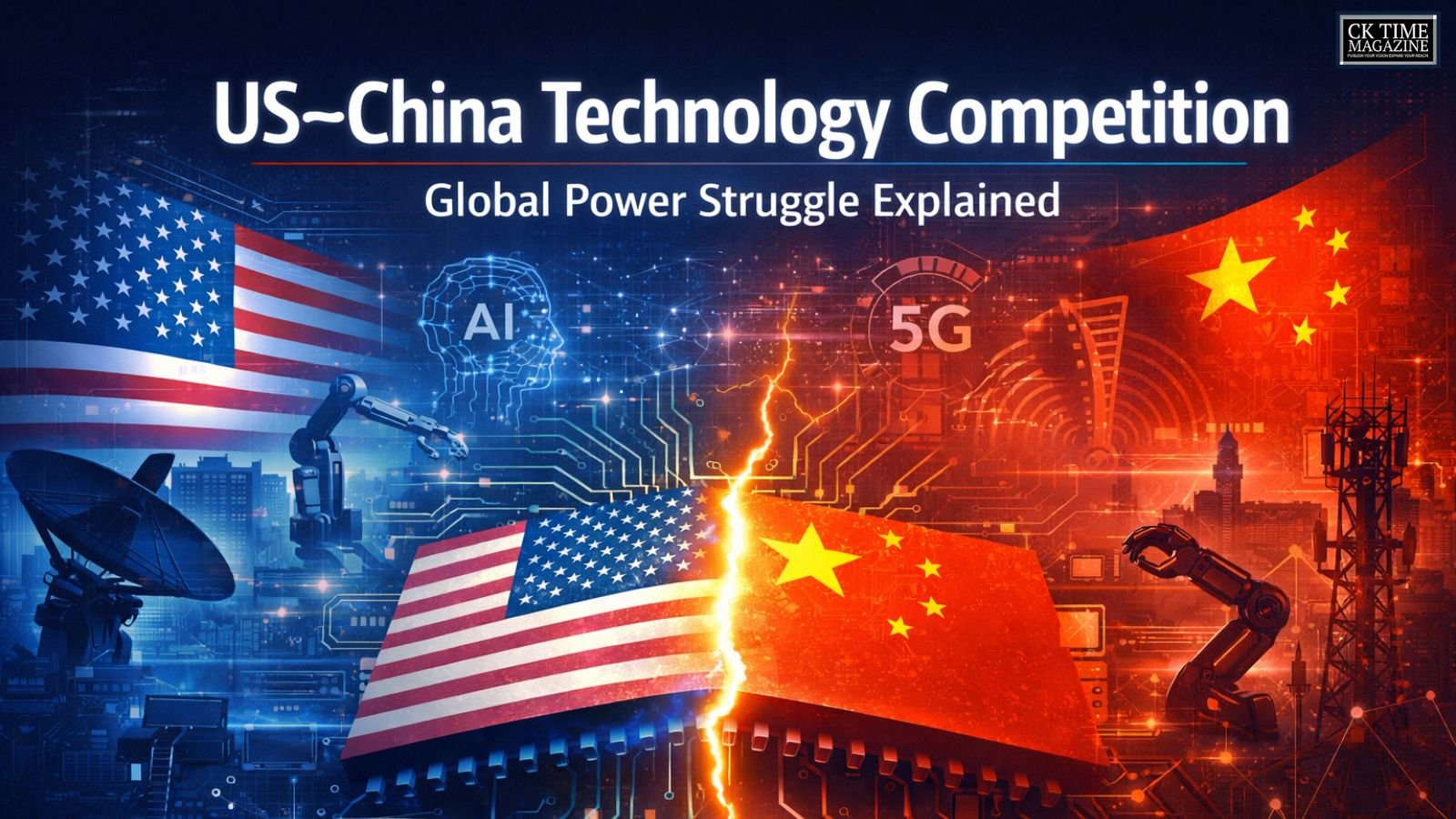
US–China Technology Competition Dimon: Global Power Struggle Explained
Introduction
The topic of US China technology competition Dimon has gained attention as global discussions around innovation, economic power, and geopolitical strategy continue to intensify. The rivalry between the United States and China is no longer limited to trade; it has evolved into a high-stakes competition in technology leadership, digital infrastructure, artificial intelligence, and semiconductor dominance.
Prominent financial leaders like Jamie Dimon have also weighed in on this competition, highlighting its impact on global markets, economic stability, and long-term growth. As the CEO of JPMorgan Chase, Dimon’s perspective carries significant influence in understanding how this technological rivalry shapes the future of business and finance.
This article explores the US–China technology competition, its key areas, Dimon’s views, economic implications, and what it means for the future.
Understanding the US–China Technology Competition
The US China technology competition refers to the ongoing rivalry between the United States and China to become the global leader in advanced technologies. This competition includes sectors such as artificial intelligence, semiconductor manufacturing, 5G networks, cloud computing, and cybersecurity.
The United States has traditionally been a leader in innovation, home to major tech companies and research institutions. However, China has rapidly expanded its capabilities through government support, large-scale investments, and technological development programs.
This competition is not just about business; it is about national security, economic dominance, and global influence.
Jamie Dimon’s Perspective on the Tech Rivalry
Jamie Dimon has frequently commented on the importance of the US China technology competition. He emphasizes that this rivalry is one of the most critical factors shaping the global economy.
Dimon believes that the United States must continue investing in innovation, education, infrastructure, and research to maintain its competitive edge. He has also highlighted the need for strong policies that support technological advancement and economic growth.
At the same time, he acknowledges China’s rapid progress in technology, noting that it has become a serious competitor in areas like AI development, fintech, and manufacturing technologies.
Key Areas of Competition
Artificial Intelligence and Machine Learning
One of the most important areas in the US China technology competition is artificial intelligence (AI). Both nations are investing heavily in AI research, aiming to lead in automation, data analysis, and smart technologies.
The United States benefits from strong private-sector innovation, while China leverages massive data access and government-backed initiatives.
Semiconductor Industry
Semiconductors are the backbone of modern technology. The competition for chip manufacturing and supply chain control is a major aspect of this rivalry.
The United States has implemented restrictions on exporting advanced chips to China, aiming to maintain technological superiority. Meanwhile, China is investing heavily in developing its own semiconductor industry.
5G and Telecommunications
The race for 5G technology has been another key battleground. China has made significant progress in building 5G infrastructure, while the United States focuses on innovation and global partnerships.
Control over telecommunications networks is crucial for data security, communication systems, and economic growth.
Cybersecurity and Data Control
Cybersecurity has become a central issue in the competition. Both countries aim to protect their data and digital infrastructure while maintaining control over information flows.
This aspect of the rivalry has implications for privacy, national security, and global digital governance.
Economic Impact of the Rivalry
The US China technology competition has a profound impact on the global economy. Companies, investors, and governments must navigate a complex environment shaped by trade restrictions, regulatory changes, and shifting alliances.
According to insights often highlighted by Jamie Dimon, this competition can create both opportunities and risks. On one hand, it drives innovation and technological progress. On the other hand, it can lead to market volatility, supply chain disruptions, and economic uncertainty.
Global businesses must adapt by diversifying their operations and staying informed about geopolitical developments.
Role of Government Policies
Government policies play a crucial role in shaping the US China technology competition. Both countries have implemented strategies to support their technology sectors.
The United States focuses on research funding, innovation incentives, and partnerships with private companies. China, on the other hand, emphasizes state-led development, industrial policies, and long-term planning.
These different approaches reflect their unique economic systems and influence how the competition evolves.
Impact on Global Technology Landscape
The rivalry between the United States and China is reshaping the global technology landscape. Countries and companies around the world are being affected by this competition.
Some nations align with one side or try to maintain neutrality, while others invest in their own technological capabilities. This creates a more fragmented global system where technology standards, supply chains, and partnerships are constantly changing.
Challenges and Risks
The US China technology competition also presents several challenges. One major concern is the risk of technological decoupling, where the two countries develop separate systems and standards.
This could lead to inefficiencies and increased costs for businesses. Another challenge is the potential for escalating tensions, which could impact global stability.
Experts, including Jamie Dimon, stress the importance of managing this competition carefully to avoid negative consequences.
Future Outlook
The future of the US China technology competition will depend on how both countries navigate innovation, policy decisions, and global relationships.
The competition is likely to continue intensifying, with new developments in AI, quantum computing, renewable energy technology, and digital finance.
Both nations will strive to maintain leadership, while the rest of the world adapts to the changing dynamics.
FAQs
What is the US–China technology competition?
It refers to the rivalry between the United States and China to dominate global technology sectors.
Who is Jamie Dimon?
Jamie Dimon is a leading financial executive who often shares insights on global economic issues.
Why is this competition important?
It affects global markets, innovation, national security, and economic growth.
Which sectors are most affected?
Key sectors include AI, semiconductors, 5G, cybersecurity, and cloud computing.
What are the risks of this rivalry?
Risks include economic instability, supply chain disruptions, and technological division.
Conclusion
The US China technology competition Dimon highlights one of the most significant global rivalries of our time. As emphasized by Jamie Dimon, this competition is not just about technology but about economic power, global influence, and future innovation.
While it presents challenges, it also drives progress and encourages both nations to push the boundaries of what is possible. The outcome of this competition will shape the future of technology and the global economy for decades to come.
2 thoughts on “US–China Technology Competition Dimon: Global Power Struggle Explained”